Industries & Case Studies
At Mirai Engineering, we let our results speak for themselves. Our case studies demonstrate technical versatility and unwavering commitment to transforming complex challenges into innovative solutions.
What Mirai has delivered
Real-world AI implementations that drive measurable business results across diverse industries. From engineering to business operations, or medicine to financial markets - we've got you covered.
Intelligent Calorie Tracking with On-Device AI

Calorie tracking only works when it is precise, and precision requires the user to specify ingredients, quantities, and preparation methods. No camera can tell you whether chicken was air-fried or oil-fried, how much sauce was used, or what is hidden inside a wrap. That context lives with the user, not in a photo. The problem is that precise logging is slow. Searching databases, adjusting portions, and navigating food lists is exactly the friction that makes users quit. Nutrition Mate was built around a different question: instead of replacing logging with guesswork, what if AI made precise logging instant?
How It Works
Nutrition Mate uses a fine-tuned small language model that runs entirely on the user's phone. A user can type a natural sentence such as "200g chicken breast, 120g rice, 10g olive oil", and the system parses the input, identifies the foods, matches quantities, and builds the entry in seconds. No cloud calls, no API latency, and no food data leaving the device.
The AI does not replace the user's discipline. It accelerates it. Users still control the ingredients and the grams while the model removes the friction between knowing what they ate and having it logged. For companies evaluating AI-enabled products, this project is a clear example of how specialized on-device models can improve retention, responsiveness, and trust at the same time.
Why On-Device?
Most AI-powered apps depend on cloud APIs from large model providers. That introduces latency, outage risk, ongoing cost dependency, and sensitive dietary data leaving the phone. We took a different path: a small, specialized model fine-tuned specifically for food understanding and deployed locally on consumer hardware. The result is fast responses, complete privacy, and zero external dependency. This reflects a broader thesis we hold at Mirai: the future of applied AI may not be bigger models, but smaller, specialized ones that live directly inside the product.
What this proves for product teams
When privacy, speed, and unit economics matter, AI does not need to sit behind a third-party API. We can embed specialized intelligence directly into a customer-facing product and turn slow manual workflows into fast structured data capture without sending sensitive information off-device.
Applai: From Job Posting to Interview-Ready Application
Applying for a role usually means moving between a job description, an old resume, ATS checkers, document editors, and generic cover-letter tools. Applai brings those disconnected steps into one guided workspace, helping candidates create stronger applications without inventing experience or losing control of their story.
One Intelligent Application Workflow
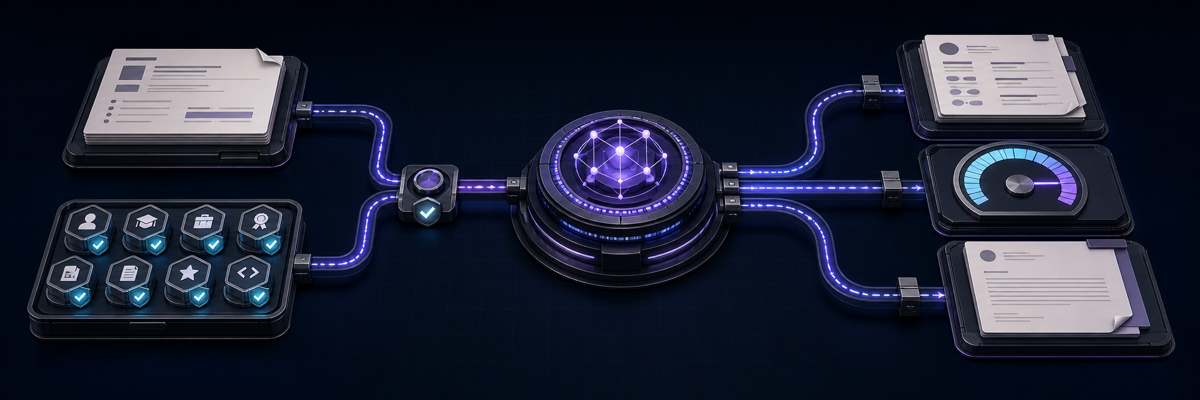
Applai can ingest a job posting directly from its URL, understand the role alongside the candidate's professional history, and coordinate three specialized AI workflows: resume tailoring, ATS assessment, and cover-letter generation. Conversational clarification resolves missing context before documents are produced, keeping outputs relevant and truthful.
Candidates can review a polished HTML preview, choose from adaptive one-page templates, and download validated HTML or PDF documents. Authentication, persistent user data, subscription billing, and paid access controls make the experience a complete production product rather than an isolated AI demonstration.
What this proves for digital product teams
Reliable AI products require more than a prompt. Applai combines agentic workflows, human clarification, deterministic document validation, and production SaaS infrastructure to turn generative AI into a focused customer journey with dependable outputs.
Mirai Engine: From Experimental Data to Better Designs
Scientific and engineering teams often depend on project-specific spreadsheets, tribal knowledge, and one-off modeling scripts. Mirai Engine replaces that fragmented process with a governed platform that takes teams from structured experimental data to model-backed design decisions and proposed next experiments.
A Reusable Experimentation Lifecycle
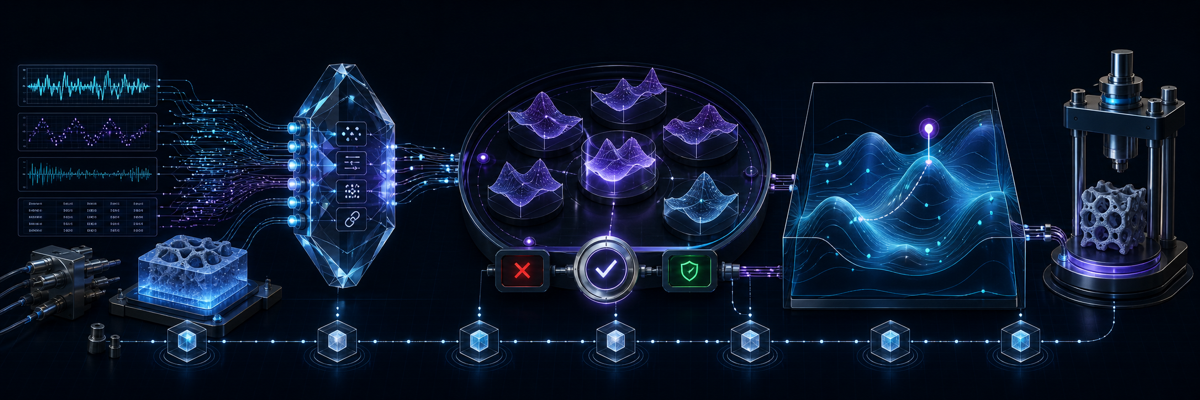
A manifest-driven experiment package defines tables, joins, inputs, outputs, units, bounds, and optimization directions. Mirai Engine validates that contract, builds canonical training data, generates preprocessing and quality artifacts, and requires an approval gate before training begins.
The platform trains and compares surrogate models, tracks candidates in MLflow, and registers only the selected challenger without automatically replacing the champion. Scientists can then inspect model quality, explore candidate designs, and use Bayesian optimization to identify promising next experiments while preserving untouched test data for evaluation.
What this proves for R&D teams
Advanced optimization can be operationalized without hiding scientific decisions inside brittle code. Mirai Engine combines flexible data contracts, traceable model governance, interactive design exploration, and production infrastructure in one auditable system designed for multidisciplinary teams.
Molecular Optimization with AI
Optimization challenges involve finding the best combination of parameters to achieve desired outcomes, whether maximizing molecular stability, extending machine lifetime, or optimizing supply chain efficiency. In practice, this means exploring vast parameter spaces: atoms in a molecule, components in a machine, or logistics variables in operations. Instead of testing countless iterations manually, AI rapidly identifies optimal configurations, accelerating development cycles and reducing costs. Below we describe our approach where we use AI to optimize the design of new eco-friendly fuels (e-Fuels).
Molecular Optimization
We were involved in the early days of molecular-modeling with Artificial Networks, nowadays spread as "Graph Neural Networks". By training an AI model with sufficient data, you can create new molecules and predict key properties.
In concrete: we reduced the experimental design of new e-Fuels from several weeks to seconds. Additionally, you can immerse the model into an optimization-framework that can output a tailored-made fuel that maximizes power output by using only carbon-free components in the chemical structure.
How Did We Do It?
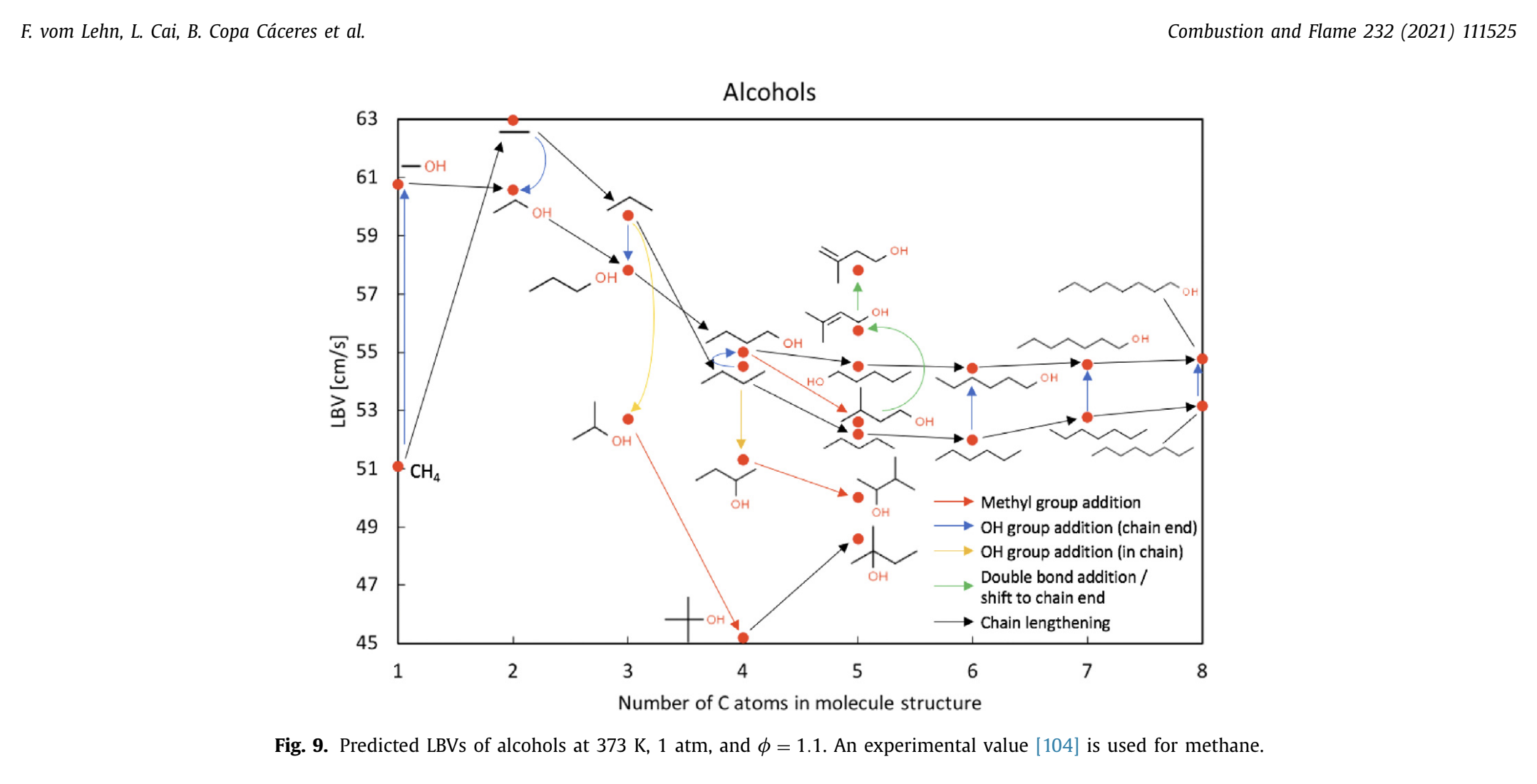
We built an AI model that predicts how fast different fuels burn. To do this, we combined two sources of data:
- Real measurements from 124 fuel compounds.
- Computer simulations based on detailed chemical models.
The AI takes into account the fuel's molecular structure, as well as conditions like pressure, temperature, and fuel-to-air ratio. With this information, it can accurately estimate burning speed, within just a few centimeters per second of the true values. Beyond prediction, the model also helps us understand why fuels behave differently. By analyzing how certain molecular groups affect burning, we can compare fuels more systematically and design new ones more efficiently. If you're curious, check out the paper below!
Medical Imaging with Connvolutional Neural Networks
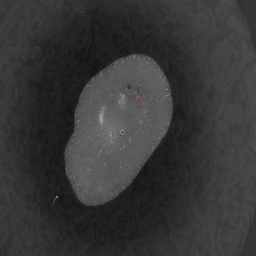
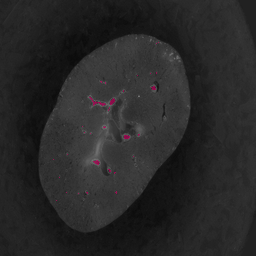
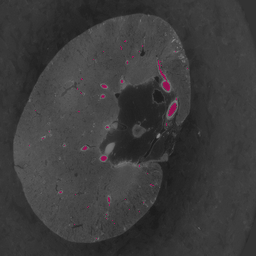
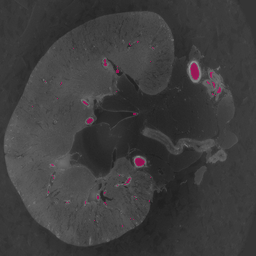
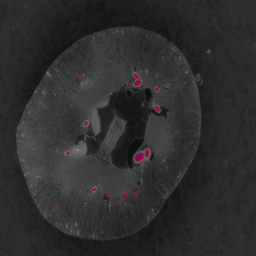
Doctors can spend over 6 months tracing vascular structures in high-resolution 3D HiP-CT scans. Therefore, automating this tracing process with machine learning, can save valuable time & resources, enabling doctors and researchers to map cellular relationships across human organs in a fraction of the time. This project addresses challenges in generalization due to anatomical variability and changing imaging quality.
Kidney Vasculature Segmentation with U-Net
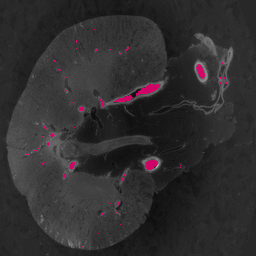
Our deep learning model uses a convolutional neural network, applying U-Net architecture to automatically segment kidney vasculature from high-resolution 3D HiP-CT scans. The model detects vessels, closing gaps often left by manual annotation, thereby supporting efforts like the Vascular Common Coordinate Framework (VCCF) & Human Reference Atlas (HRA).
As mentioned before, manual segmentation of vascular structures can take months for a single dataset, due to the complexity and high resolution. With our AI model, we achieve ~97% accuracy, reducing segmentation time from several months to seconds per dataset.
Accelerate Medical Research
You get ultra-fast, reliable vascular maps without the manual overhead. Whether for basic research or product-development use cases involving medical imaging, you can free up expert time, increase throughput, and improve reproducibility. Due to confidentiality reasons, we can't share the results of this project, but you can check out a similar paper below where the same model was used to segment retinal blood vessels shown in the image above!
Intelligent Financial Markets Analysis
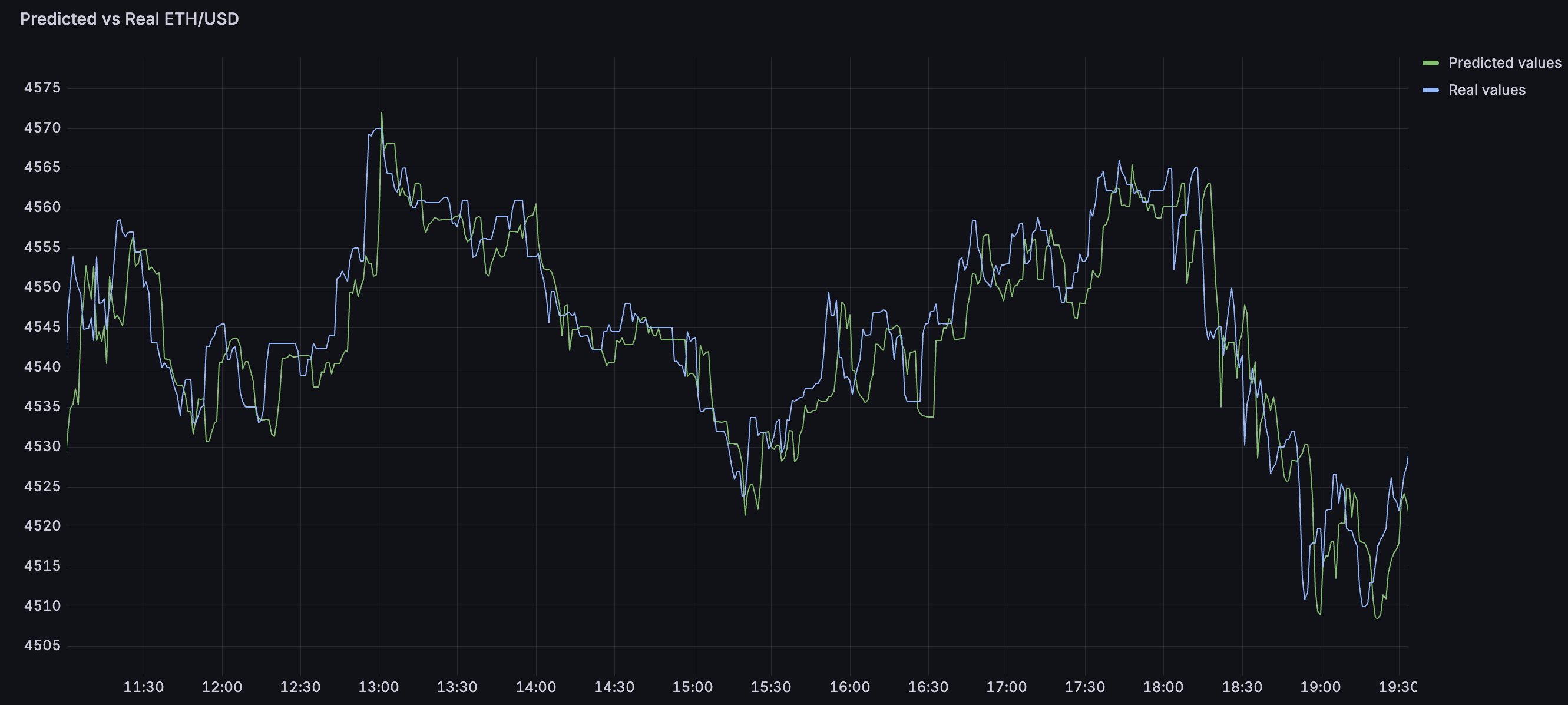
Real-time market analysis and forecasting models can be of tremendous help for market specialists. With advanced ML models coupled with Large Language Models performing sentiment analysis, we can decrease the uncertainty of market predictions. By combining powerful time-series models such as ARIMA & LSTM with a sentiment-analysis pipeline powered by a fine-tuned LLM, we can create a system that ingests real-time data, trains models, and delivers forecasts that adapt continuously to market conditions and public opinion.
Real-Time Market Forecasting with AI
Our system processes multiple data streams simultaneously: price feeds, volume data, economic indicators, and news sentiment. The architecture features automated model retraining every 4 hours to adapt to changing market conditions, with A/B testing capabilities to compare different model versions in production.
The infrastructure includes real-time data validation, anomaly detection, and automated rollback mechanisms. We implemented MLflow for experiment tracking, Apache Kafka for data streaming, and Grafana dashboards for real-time monitoring.
Make Data-Driven Decisions Faster
Whether you're monitoring financial markets, supply chains, or consumer demand, AI-driven forecasting enables faster, data-backed decisions. With scalable infrastructure and automated model management, you get reliable, real-time insights that evolve with your data.
AI Agents for Financial Markets
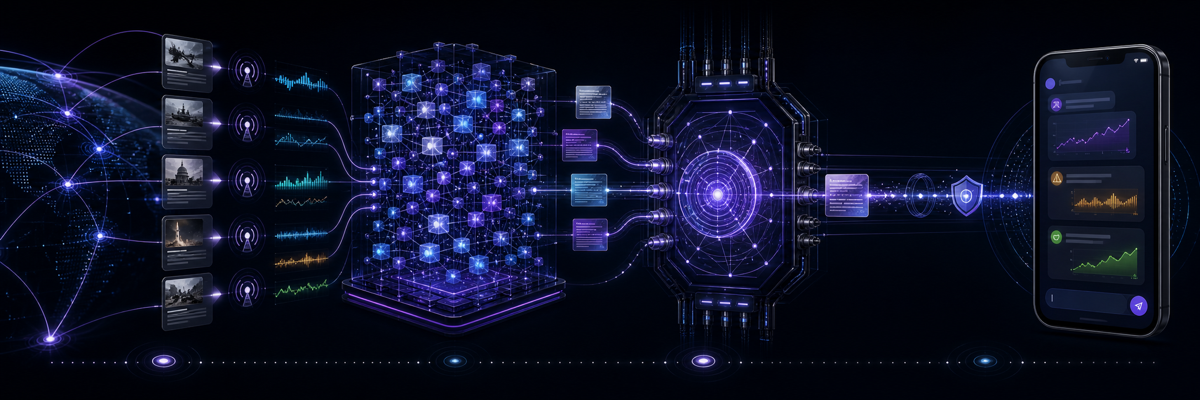
One of the biggest challenges when investing in the stock market, is keeping up-to date with the latest news & developments in real-time. Using intelligent agents for automated market & news analysis, with on-demand real-time insights delivery by WhatsApp (or any other messaging platform), we can help you stay ahead of the curve.
Real-Time Market Analyst Agent with LLMs
We built an AI agent that continuously monitors global news streams and transforms them into actionable market insights in real time. Using a Retrieval-Augmented Generation (RAG) pipeline and a vector database holding hundreds of thousands of articles, the agent can search, summarize, and contextualize the latest developments as they happen.
The system connects directly through WhatsApp, providing instant, conversational access to market updates and trend analysis. Behind the scenes, it leverages Model Context Protocol (MCP) and optimized LLM serving/inference, ensuring fast, efficient responses even at scale.
Your Personal AI Analyst
Wether you need a market analysts, an intelligent HR assistant, or a smart companion that knows everything inside your company (and data you don't want to share with OpenAI, Google etc.) - we can build you an AI agent that can do all of that. Instead of manually scanning endless news feeds, you get a personal AI assistant at your fingertips to summarize events, highlight risks, and surface opportunities in real time, enabling faster, smarter decision-making.
Computer Vision - Ongoing Project -
Computer vision can be used for real-time customer insights and behavior analysis. Using advanced Convolutional Neural Networks (CNNs), we are developing a system that can identify and classify people entering a store in real time. By distinguishing between different customer groups, the solution will allow businesses to track how marketing campaigns impact foot traffic and audience engagement.
Object Identification for Customer Insights
Using advanced Convolutional Neural Networks (CNNs), we are developing a system that can identify and classify people entering a store in real time. By distinguishing between different customer groups, the solution will allow businesses to track how marketing campaigns impact foot traffic and audience engagement.
The camera-based system will run efficiently at the edge, delivering immediate insights without the need for heavy infrastructure. This will enable businesses to measure the effectiveness of their campaigns, adapt strategies quickly, and maximize return on investment.
Quantify Your Marketing Impact
Turn raw video streams into actionable insights. Instead of guessing whether your marketing works, you can quantify audience response in real time and make data-driven decisions to refine your strategy.
Predictive Maintenance - Ongoing Project -

AI-powered predictive maintenance can play a vital role for heavy industry and manufacturing operations. By analyzing sensor data, operational logs, and historical maintenance records, we are developing a model that will identify early warning signs that equipment may be heading toward downtime.
Predictive Maintenance in Heavy Industry
We are building an AI system that leverages predictive modeling to anticipate machinery failures in the mining sector. By analyzing sensor data, operational logs, and historical maintenance records, the model will identify early warning signs that equipment may be heading toward downtime.
Instead of reacting to breakdowns, this approach will empower companies to schedule interventions proactively, reducing costly unplanned outages and extending machinery lifespan.
Transform Maintenance into Strategic Advantage
AI transforms maintenance from a reactive cost center into a strategic advantage. Whether in mining, manufacturing, or energy, predictive maintenance minimizes downtime, lowers repair costs, and ensures your operations run safely and efficiently.
Ready to Transform Your Business?
Let's discuss how AI can revolutionize your operations and drive unprecedented growth.
Get Started Today